
Insuring a Kia
In the scheme of things, Kia vehicles haven't been sold in the U.S. for very long. The South Korea automaker has definitely made up for lost time, though, by offering a wide range of extremely affordable, feature-packed machines. While these cars will never be mistaken for being high-end cars, they typically offer a great deal of value. In comparable brands, finding vehicles that include many of the same features will set you back by a lot more money. Another way in which they save money is through low insurance premiums. The average yearly cost to insure cars from this make is $1,436.24, and it is ranked 12th on a list of 36 makes. If you'd like to own a car that won't cost an arm and a leg to cover, this may be right automaker for you.
Model Statistics
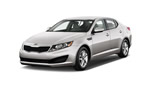

Average Annual Cost to Insure
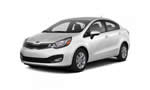
Average Annual Cost to Insure
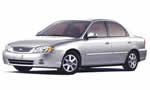
Average Annual Cost to Insure

Average Annual Cost to Insure
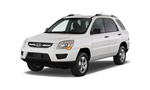
Average Annual Cost to Insure
Average Annual Cost to Insure
Average Annual Cost to Insure
Average Annual Cost to Insure

Average Annual Cost to Insure

Average Annual Cost to Insure
Average Annual Cost to Insure
Average Annual Cost to Insure
Average Annual Cost to Insure


Brief History of the Brand
Kia is a South Korean automaker, but it didn't debut in the U.S. until the 1990s. When it was originally founded in 1944, the company manufactured bicycle parts and steel tubing. It stuck with those products for some time. During the 1960s, it branched out to start producing motorcycles and scooters. Not surprisingly, the company finally got into the auto-manufacturing game. The company built Korea's first car production facility in 1973. The car parts started to be used in makes like Fiat and Peugeot. The first car for the U.S. market, the Sephia, debuted in the early 1990s. Since then, the brand has produced a variety of very popular economy cars.
Improved Safety Ratings Help Costs
For a while, the cars didn't fare so well when it came to safety. The company set about to change all of that, and it's safe to say that it has largely succeeded. Although models like the Rio are not tested by organizations like the Insurance Institute for Highway Safety, the IIHS has tested the Sportage. Newer Sportages received across-the-board "Good" ratings by the IIHS. Late-model Fortes have also received mostly "Good" ratings from that organization. Safety ratings come into play when calculating premiums, and decent ratings help keep expenses low.
Customer Statistics
Top 5 Insurance Companies
Coverage Type
-
Geico10%
-
Progressive9%
-
State Farm8%
-
Allstate6%
-
Liberty3%
Male Vs. Female (percent)
Average Age (years)
Credit Score
Education
Important Factors
-
Price56%
-
Coverage options27%
-
Customer service10%
-
You don't care, you just need car insurance7%
Theft Rates are Low for the Most Part
Another thing that insurers take into consideration when calculating premiums is theft rates. Vehicles that are stolen on a regular basis are usually slapped with higher premiums. Based on data from the National Insurance Crime Bureau, however, these automobiles are not popularly targeted by car thieves. In fact, not a single model shows up on the top-ten lists that the organization compiles for the 50 U.S. states. The top-ten nationwide list does not have a Kia on it either. This is good news in terms of costs.
Rock-Bottom Price Tags have Dramatic Impact on Rates
The main thing that keeps the cost of protecting one so low is the average price of these automobiles. They usually have very low MSRPs. Even higher trim levels are generally very affordable. The Rio, for example, has a starting MSRP of $13,400. The Sportage, which is an SUV, has a starting MSRP of $18,500. The Forte has a price tag that begins at $15,200. With prices that low, it's easy to see why providers cover these cars for so little.
The average annual amount to protect various models is as follows:
- Rio 4-Cylinder Sedan - $1,286.00
- Sportage 4-Cylinder SUV - $1,236.00
- Forte 4-Cylinder Sedan - $1,313.00

- © 2024 Automobile.com
- All rights reserved.
-
2029 Century Park East, Suite 1400
Los Angeles, CA 90067
1 (866) 225-7883
![[X] (click to close)](/images/x_close.png)