
Insuring a Ford
As one of the best-known automakers in the world and one of the illustrious Big Three, Ford sells cars that everyday consumers want. Since its inception, the company has placed a top priority on producing vehicles that people can actually afford. That's not to say that the iconic American automaker doesn't produce more expensive vehicles too; it certainly does. On the whole, however, these vehicles are affordable and packed full of top-notch features. So-so safety ratings and somewhat high theft rates make some models a little pricey to insure. The average annual cost to cover a Ford is $1,591.91, which ranks it 24th on a list of 36 makes. Learn more about why it costs that much to protect these vehicles below.
Model Statistics

Average Annual Cost to Insure
Average Annual Cost to Insure
Average Annual Cost to Insure
Average Annual Cost to Insure
Average Annual Cost to Insure
Average Annual Cost to Insure
Average Annual Cost to Insure
Average Annual Cost to Insure
Average Annual Cost to Insure
Average Annual Cost to Insure
Average Annual Cost to Insure
Average Annual Cost to Insure
Average Annual Cost to Insure
Average Annual Cost to Insure
Average Annual Cost to Insure
Average Annual Cost to Insure
Average Annual Cost to Insure
Average Annual Cost to Insure
Average Annual Cost to Insure
Average Annual Cost to Insure
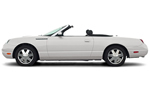
Average Annual Cost to Insure
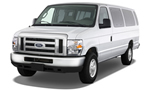
Average Annual Cost to Insure

Average Annual Cost to Insure
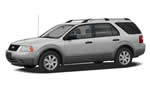
Average Annual Cost to Insure
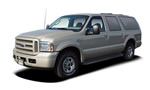
Average Annual Cost to Insure
Average Annual Cost to Insure
Average Annual Cost to Insure
Average Annual Cost to Insure
Average Annual Cost to Insure
Average Annual Cost to Insure
Average Annual Cost to Insure


Brief History
To understand how Ford got where it is today, it's important to understand its roots. The company was founded by Henry Ford in 1903. Contrary to popular belief, the company did not invent the automobile. He did, however, invent the moving assembly line, which finally made cars affordable enough for everyday people. After buying the Lincoln Motor Company in 1925, the automaker branched out and started including a few higher-end vehicles in its lineup. The brand has always stayed on the cutting edge in terms of popular demand, and its sporty Mustang has remained a top-seller for decades. Today, the automaker holds the title of having the top-selling car in the U.S. The F-150 truck has held that distinction for several years.
Moderate Prices Keep Premiums in Check
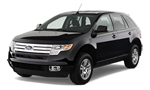
If you want to buy an expensive vehicle, you should be able to find one without a lot of difficulty. For the most part, though, these vehicles are very affordable. The popular Edge, for example, has a starting MSRP of $29,770. The Mustang coupe has a starting MSRP of $22,310, but higher trim levels will set you back quite a lot more. With a starting MSRP of $16,500, it's easy to see why the Focus is such a popular car. It is probably the most affordable top-selling model in the lineup.
High Theft Rates Drive Up Prices
Despite the reasonable price tags attached to many of their vehicles, insurance rates tend to veer toward the higher end of the scale. A huge part of the reason is that one of Ford's top sellers appears on a list of the top ten most-stolen vehicles in the U.S. On the list, which is compiled by the National Insurance Crime Bureau, the 1997 F-150 is ranked fourth. It is quite popular with thieves. The Explorer also appears on top-ten lists in several states. Of course, you can enjoy lower premiums by avoiding those particular vehicles.
Customer Statistics
Top 5 Insurance Companies
Coverage Type
-
State Farm8%
-
Geico8%
-
Progressive7%
-
Allstate6%
-
Farmers3%
Male Vs. Female (percent)
Average Age (years)
Credit Score
Education
Important Factors
-
Price51%
-
Coverage options30%
-
Customer service13%
-
You don't care, you just need car insurance6%
So-So Safety Ratings Affect Policy Costs
It is surprising to note that some of Ford's most popular vehicles have less-than-stellar safety ratings from the Insurance Institute for Highway Safety and the U.S. government. The Edge for example, received three stars out of five from the U.S. government in some crash tests. The Mustang received a few "Good" ratings from the IIHS, but it also received several "Acceptable" and "Marginal" ratings as well. The Focus fared quite well and received across-the-board "Good" ratings from the IIHS and four- and five-star ratings from the government.
The average cost to cover the following popular models includes:
- Edge SE 4-Cylinder - $1,213.00
- Focus SE Sedan 4-Cylinder - $1,309.00
- Mustang Coupe 6-Cylinder - $1,433.00

- © 2026 Automobile.com
- All rights reserved.
-
2029 Century Park East, Suite 1400
Los Angeles, CA 90067
1 (866) 225-7883
![[X] (click to close)](/images/x_close.png)